Autopilot is: ON
by Zoltán Dankó
Future-Proof Organization Practitioner -- Human leadership fuels high performance. If you have open mind, I help add open culture to leverage open-source - Change is risk: doing the same leads nowhere. Let's move on!
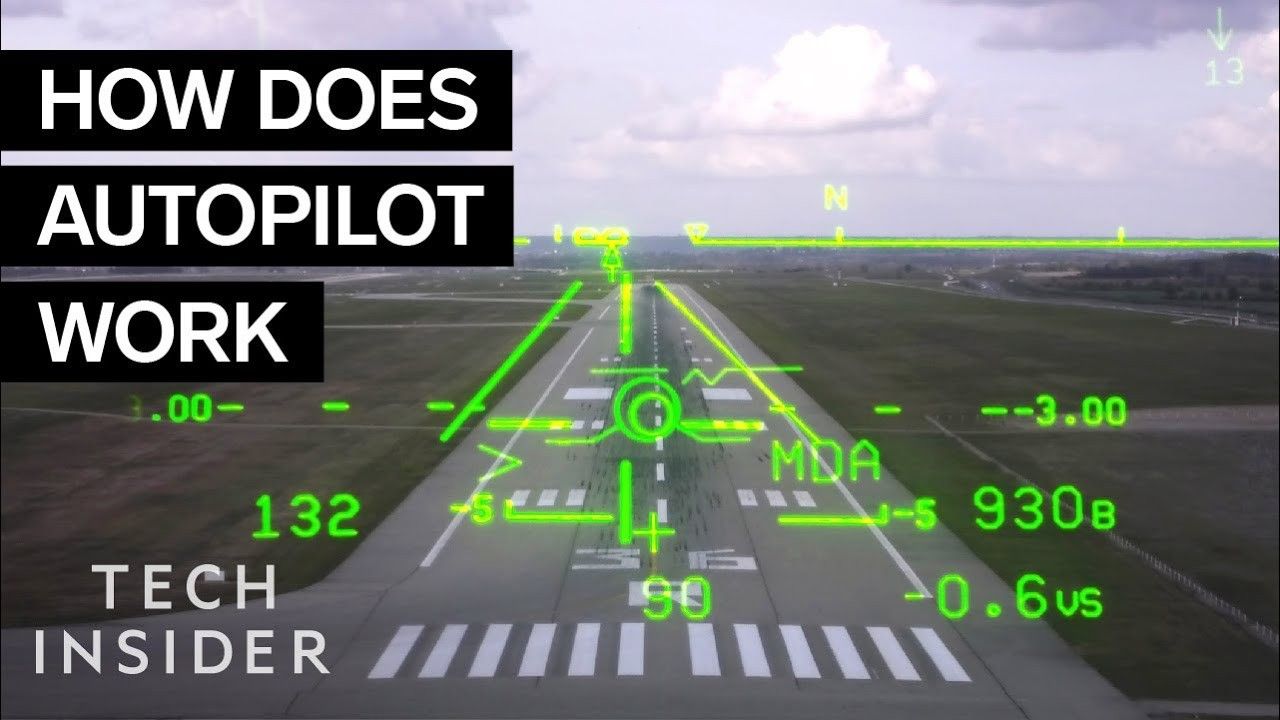
You may have heard about the function of an aircraft: robotic pilot or short robopilot. Let's call it from now autopilot. It has an important job to control and fly the plane during the flight. The pilots can appreciate the help very much since they don't need to deal with the constant changes in the environment and, consequently, with the controls' modifications during a 10 hours flight. Guess what? The autopilot could even land the aircraft if necessary.
We, humans, have an operation mode like autopilot, too. It is an operation mode not to discern at first sight because it is veiled from us. This veil is a kind of camouflage on top of our minds. It is not created by some witchcraft but by the provision. We have approximately 100 billion neurons in our brains. This vast number of neurons have an order of magnitude larger number of connections among each other. Even the strongest supercomputer can't model this complexity yet. You, dear reader, would find it easier to review and control the aircraft's readouts in the cockpit than to assess what's happening in our minds.
Let's call the capacity of our mind to grasp a tiny fraction of what happens in our mind: consciousness. It enables us to reflect on isolated functions of our body or specific thoughts. We can imagine that our consciousness cannot embrace everything that's happening in us at a time. We like to call humans conscious beings. It might generate the illusion that we can keep everything under the control of what happens in and with us. Our ego has a tough job. It has to manage our minds to keep us on track with the standard metrics. Let's see some examples. Our brain must work at the principle of a low energy consumption approach. If it can use previously stored patterns, it will instead execute a constant assessment of our environment. If we set a purpose, our mind is directed that our thoughts, desires, etc., may look that they are on track to reach that goal. It can be more money, more power, to serve others, or to do something good. It depends on how deep this purpose is seated in our mind, the more or less we can follow the route. If we let ourselves be distracted easily by thoughts and desires, we won't achieve our goal.
You may have figured out how the autopilot of our mind works in our daily lives. An adult person may think she/he may possess all the knowledge and rules on how to operate in life. Fortunately, there is no exam where it could turn out how far we are from that ideal. We have inherited the majority of our mind patterns that we use day by day. Reflect yourself next time when you get into a conflict with someone. Your behavior will be similar to your parents, grandparents, or someone you lived with a lot. The way you behave towards an aggressor may indicate what kind of childhood you had in the first 10 years of your life. You may strike back if you grew up in a free environment, or you try to contract yourself as small as possible, and you give up yourself immediately. As soon as you drop the concept you believed in for decades that your mind cannot be changed, you may regard your behavior as a pattern. It will enable you to start changing the usual pattern to something, and you can add your own word to what will happen.
I don't want to say that you should turn off your autopilot. Our brain's capacity to handle things seems to be much less than we think. Evolution has been done a great job because we have been here. However, our brain has preserved some fossils. These are brain functions that were useful 50 000 years ago, but now they represent but obstacles. They intervene in our behavior and actions to turn them in the wrong direction. Fear is called in the novel Dune the little-death. It is correct to say that since fear shuts down higher cognitive functions. Fear has always been the tool to control the masses. In the early times, the so-called God-emperors used it. Later the institutionalized religion developed it further. Nowadays, politics and media let it advance and be sophisticated for the same purpose. If you have children, keep in mind that your fears will define the horizon of your children's opportunities in life.
If you take the time to learn how your autopilot is working, you will know what you can take over and may control or change. You also will discern what will be better to let the autopilot do for you. Stepping forward by understanding yourself better, you may experience freedom. It doesn't mean you can do anything, but you may know what could be done differently. It's about your decision whether your autopilot will be on or you advance to another trajectory consciously. It also includes the uncertainty that things may twist and turn due to the complexity around us. All in all, it makes sense to override the autopilot sometimes.
Let's conclude with the wisdom of Ludwig Wittgenstein: "Whereof one cannot speak, thereof one must be silent."